By Frans de Waal | Published 2019 by W. W. Norton & Company
I am sitting in session, a clients shoulders rise, their breath shortens, their eyes drift to a specific spot in the room, and all of that is happening well ahead of any story they’d tell me about what is going on. We tend to think of emotion as something we think our way into. Mostly, it’s the other way around.
Frans de Waal spent his career studying primates, and this book makes the case that emotion isn’t a uniquely human, uniquely rational thing we layer on top of biology. It’s the biology. We just narrate it after the fact.
Quick Take
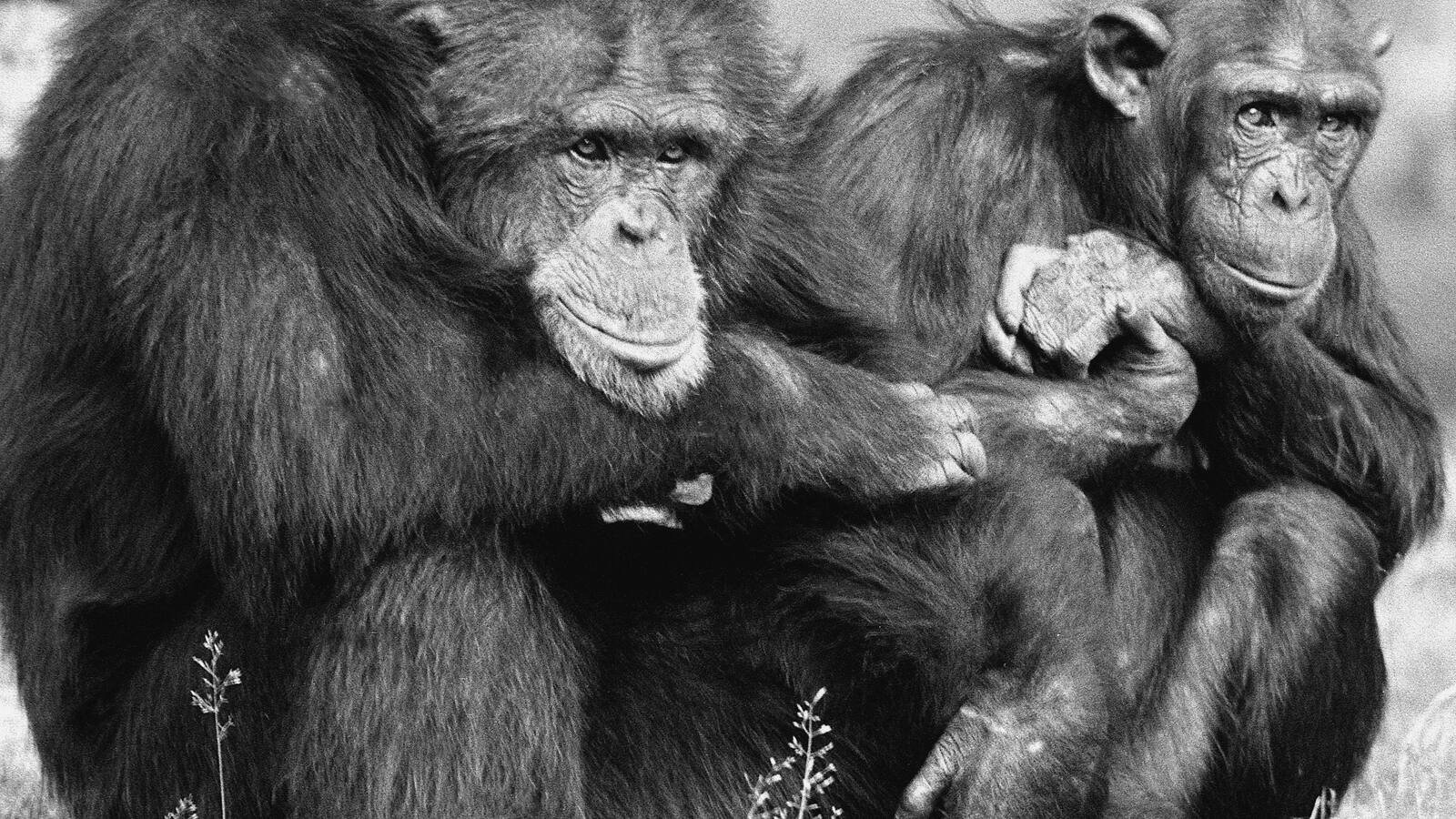
De Waal’s core argument: emotions aren’t a soft, irrational add-on to intelligence, they’re an ancient, embodied system we share with a huge range of animals, and they show up in the body and face long before, and often instead of, language. The book opens with the true story of Mama, an elderly chimpanzee, and her final embrace with a biologist who’d known her for decades, and uses it to unpack what emotional expression actually is across species, including our own.
Read this if: you’re curious why “just think about it differently” so often fails to change how you actually feel, or you want a science-backed case for why the body isn’t a lesser, less trustworthy version of the mind.
Summary
Drawing on decades of primatology, Mama’s Last Hug argues that emotions like empathy, grief, jealousy, and shame are not uniquely human inventions but ancient survival tools shared broadly across the animal kingdom. De Waal walks through facial expressions, body language, and social behavior in chimpanzees, bonobos, and other animals to show that emotion is read through the body first and explained in words second, if it’s explained at all. He pushes back on the old idea that reason sits above emotion and keeps it in check, arguing instead that the two are deeply intertwined, and that emotion often drives behavior well before conscious thought catches up.
Where This Connects to the Work I Do
- Brainspotting is built on the premise de Waal spends the whole book defending: the body knows before the story does. We follow eye position and physical sensation because that’s where the information actually lives, because the verbal narrative is often incomplete.
- Watching for what a client’s body is doing, a held breath, a tightened jaw, a look away, is not so different from what de Waal describes primatologists doing with animals who can’t self-report. The signal is there. It just isn’t verbal.
- A lot of people come in believing they should be able to think their way out of how they feel. This book is a good reminder that emotion is older and faster than reasoning, in every species that has it, ours included.
Key Takeaways
- Emotions aren’t the opposite of intelligence, they’re a fast, ancient information system that evolved to keep us alive and connected long before language existed.
- Facial expressions and body language are often more honest than words, because they’re harder to consciously edit.
- Empathy and grief show up in animals in ways that are hard to explain away, which suggests they’re not learned social performances but built-in responses.
Questions I might ask if this was an actual book club
- Where in my life have I trusted a verbal explanation over what my body was clearly telling me?
- Has there ever been a moment where I understood how I felt by watching myself react, rather than by thinking about it first?
- What would change if I treated my own emotional reactions the way de Waal treats an animal’s, as information, not as something to talk myself out of?
If This Resonated
If you’ve ever felt like your body reacts before you have a chance to explain it, or you’re tired of trying to think your way into feeling differently, that’s exactly the territory I work in.
For more info about the book: https://www.wwnorton.com/books/9780393635065
Leave a Reply